Human factors · Communications · Safety at sea
A radio may work perfectly while the message itself fails. Under pressure, attention narrows, memory becomes less reliable and ordinary conversation habits become dangerous.
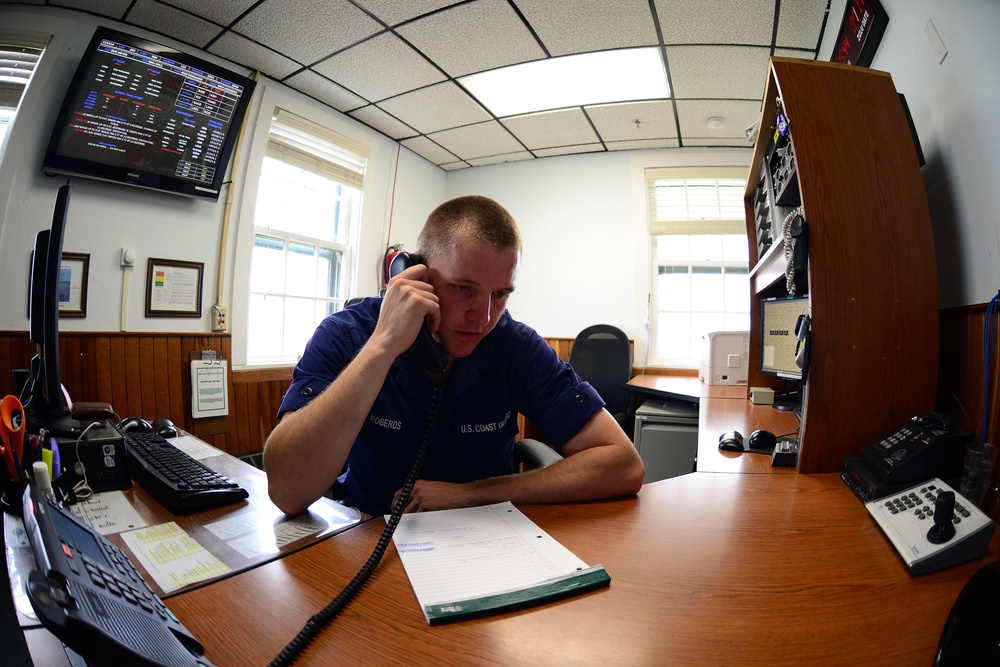
Stress does not only change how people sound. It changes what they notice, what they remember and how they interpret incomplete information. At sea, those effects can meet noise, weak signals, unfamiliar voices and a channel shared by many users.
The radio is only one link
A successful exchange requires a chain: the sender must recognise what matters, form a clear message, transmit it intelligibly, reach the right station and receive confirmation that the meaning—not merely the sound—was understood. Stress can weaken every link.
A person dealing with flooding, fire, injury or loss of control may try to explain the whole story at once. The result can be a long transmission in which the essential facts are buried. The listener may hear many words but still lack a reliable position, the nature of the problem or the number of people at risk.
Urgency increases the need for structure precisely when structure becomes hardest to maintain.
What pressure does to a message
Under stress, attention tends to narrow.1 They may focus on the most visible problem and omit information that is obvious to them but invisible to the receiving station. Working memory also becomes crowded: a call sign, position, channel instruction or question can disappear almost as soon as it is heard.2
Stress also affects the voice. The most consistently reported change is a rise in pitch; effects on speech rate and loudness vary between people and between studies.3 Raising the voice does not add clarity. Shouting distorts the transmission, and radio manufacturers advise speaking in a normal tone with the microphone about one inch (2–3 cm) from the mouth.9 Volume cannot repair clipped words or a message delivered without pauses.
Expectation creates another trap. Research on pilot–controller radio communication shows that listeners are predisposed to hear what they expect to hear, and that similar call signs on the same frequency are a recurring factor in miscommunication.4,5 The same risk applies at sea with similar vessel names, numbers or place names. That is why acknowledgement and read-back matter. “Received” confirms reception;7 repeating the critical detail helps confirm meaning.
Why standard language helps
The IMO Standard Marine Communication Phrases (SMCP), adopted in 2001, were developed to overcome language barriers at sea and avoid misunderstandings that can cause accidents. The phrases use simplified maritime English and cover shore-to-ship, ship-to-ship and on-board communication, including distress, urgency and safety traffic, pilotage, VTS and helicopter operations.6
Standard wording also reduces the number of choices a speaker must make and gives the listener a familiar pattern. Prowords, a predictable order of information and short transmissions are therefore not ceremonial habits; they make a message easier to produce and easier to receive under pressure.
The distress voice message is the clearest example. After a DSC distress alert, it is sent on channel 16 in a fixed order:7
The listener is part of the safety system
Good communication is not produced by the caller alone. A skilled receiving operator slows the exchange down without wasting time. Short, specific questions—position, nature of distress, assistance required, persons on board—turn an unstructured account into usable information. These are the same elements the distress message is built around.7
Closed-loop communication is especially valuable: the receiver repeats a critical detail, and the sender confirms or corrects it. This is not necessary for every routine sentence, but it is powerful when a digit, direction, position or intention could change the response. Maritime authorities recommend closed-loop communication on the bridge to eliminate doubt and ambiguity,8 and the SMCP provides a matching tool: “Repeat …” followed by the part of the message that needs safeguarding.6
Preparation creates capacity
Familiarity cannot remove fear, but it can preserve mental space. Knowing where the radio is, how to select the correct channel, how the microphone behaves and where the vessel’s identity and position can be found reduces the number of new decisions required in an emergency.
The goal is not a perfect voice. It is a message that another person can turn into action. Clear structure, deliberate pace, accurate identification and confirmation make communication more resilient when the people using it are under the greatest pressure.
References and further reading
- Easterbrook, J. A. (1959). The effect of emotion on cue utilization and the organization of behavior. Psychological Review, 66(3), 183–201.
- Shields, G. S., Sazma, M. A. & Yonelinas, A. P. (2016). The effects of acute stress on core executive functions: A meta-analysis and comparison with cortisol. Neuroscience & Biobehavioral Reviews, 68, 651–668.
- Giddens, C. L., Barron, K. W., Byrd-Craven, J., Clark, K. F. & Winter, A. S. (2013). Vocal indices of stress: A review. Journal of Voice, 27(3), 390.e21–390.e29.
- Cardosi, K. M. (1994). An analysis of tower (local) controller–pilot voice communications. DOT/FAA/RD-94/15. U.S. Department of Transportation, Federal Aviation Administration.
- Monan, B. (1991). Readback/Hearback. ASRS Directline, Issue 1. NASA Aviation Safety Reporting System.
- International Maritime Organization (2001). IMO Standard Marine Communication Phrases, Resolution A.918(22). See also IMO: Standard Marine Communication Phrases.
- Maritime and Coastguard Agency (2024). GMDSS VHF DSC procedures for small boat users. Updated 24 July 2024.
- Australian Maritime Safety Authority (2016). Marine Notice 11/2016: Bridge Resource Management (BRM) and expected actions of bridge teams in Australian pilotage waters.
- Icom UK. How to use a Marine VHF Radio.
- Image: U.S. Coast Guard, Station Humboldt Bay crewmember stands radio watch, 10 July 2014. DVIDS 1447285. Public domain.