Maritime history · Communications · Safety at sea
The loss of Titanic did not create maritime radio or international safety regulation. But it exposed the consequences of treating communication as a convenience rather than a safety system—and accelerated changes that still shape how ships call for help today.
Prefer to watch? Explore the history of GMDSS in the video below.
On the night of 14 April 1912, the North Atlantic was crowded with wireless signals.
Passenger messages travelled between ships and shore. Ice reports passed from vessel to vessel. Operators worked through backlogs of private telegrams. The technology was still relatively new, but its value was already clear: for the first time, a ship far beyond visual range could ask another ship—or a station ashore—for assistance.
Yet this was not the coordinated maritime safety network we know today.
There was no modern Global Maritime Distress and Safety System. Radio rooms were not always continuously attended. Wireless operators might be employed by a communications company rather than directly integrated into the ship’s command structure. Messages could be received without their operational importance being fully understood or communicated.
Titanic entered that imperfect system on her maiden voyage.
A new technology with an uncertain role
Wireless telegraphy had already demonstrated its potential before Titanic sailed. In 1899, a wireless message from the East Goodwin Lightship helped summon assistance after a collision. Maritime use expanded rapidly during the following decade.1
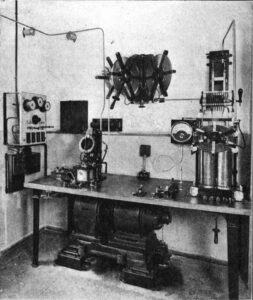
By 1912, Titanic carried a powerful Marconi installation and two wireless operators, Jack Phillips and Harold Bride. The British inquiry concluded that the equipment was effective and that two operators were considered sufficient for continuous service aboard Titanic.2
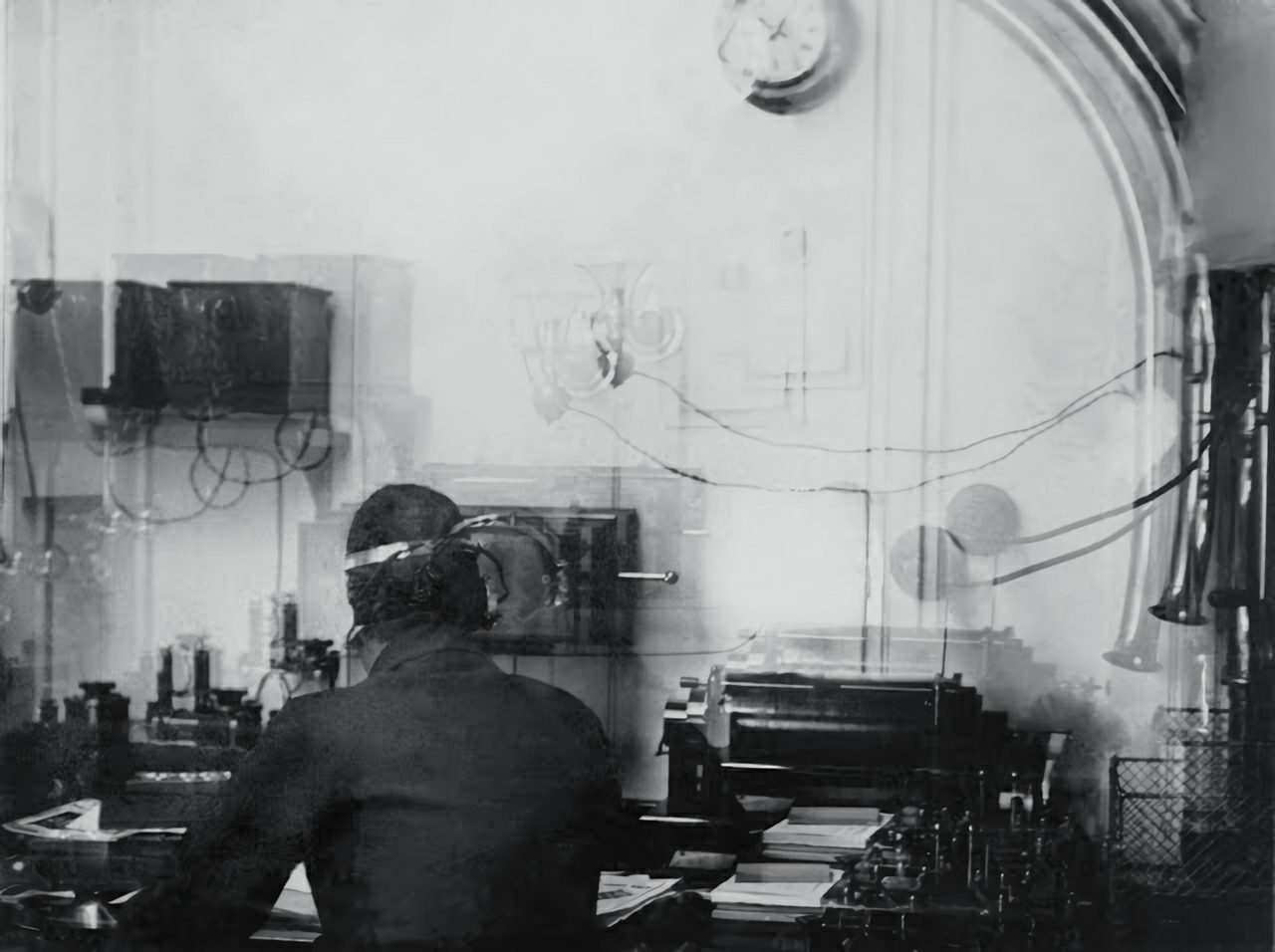
The operators’ workload included large quantities of commercial passenger traffic. Wireless communication was simultaneously a business service, a technical novelty and an emerging safety tool. The boundaries between those roles were not yet sufficiently mature.
This distinction matters. The problem was not simply that ships lacked radios. The deeper problem was that maritime radio had not yet become part of a consistently organised international safety system.
Ice warnings in a fragmented system
Titanic received several messages concerning ice during 14 April. Some reached the bridge. Others were handled differently or arrived while the operators were occupied with other traffic. Historical discussions often reduce this complicated chain of events to a single “ignored warning,” but the evidence shows a broader organisational problem.
Receiving information is not the same as integrating it into decision-making.
A warning must be received, correctly understood, assigned suitable priority, delivered to the person responsible, considered together with other available information and translated into appropriate action.
Titanic’s experience demonstrated how information could exist within a ship’s communication system without producing the necessary operational response. The wireless operators were not navigation officers. Messages did not all arrive in a standardised safety format, and the relationship between the radio room and bridge was less formalised than it would become in later safety systems.
Californian and the cost of silence
The nearby steamship Californian has become one of the most debated elements of the Titanic story.
Earlier that evening, Californian had reported ice. Its sole wireless operator, Cyril Evans, later went off duty and shut down the set. When Titanic began sending distress calls, no one aboard Californian was listening by radio.
Officers on Californian observed rockets from another vessel, but their significance was not acted upon with sufficient urgency. Both the British and American investigations examined the ship’s response closely, although their conclusions and language were not identical.34
It is tempting to turn this into a simple story about one individual failing to remain awake. That misses the larger lesson: a safety system should not depend entirely on the chance presence of one person at one receiver.
The message that reached Carpathia
If the silence aboard Californian revealed the weakness of the existing system, the response from Carpathia demonstrated its extraordinary potential.
Titanic’s operators transmitted distress calls using both CQD, associated with the Marconi service, and the newer SOS signal. Harold Cottam, the wireless operator aboard Carpathia, received the call and alerted the bridge. Captain Arthur Rostron immediately changed course and prepared his ship to receive survivors.
Carpathia was too far away to reach Titanic before she sank, but she arrived in time to rescue the people who had escaped in lifeboats. Wireless communication made that response possible.
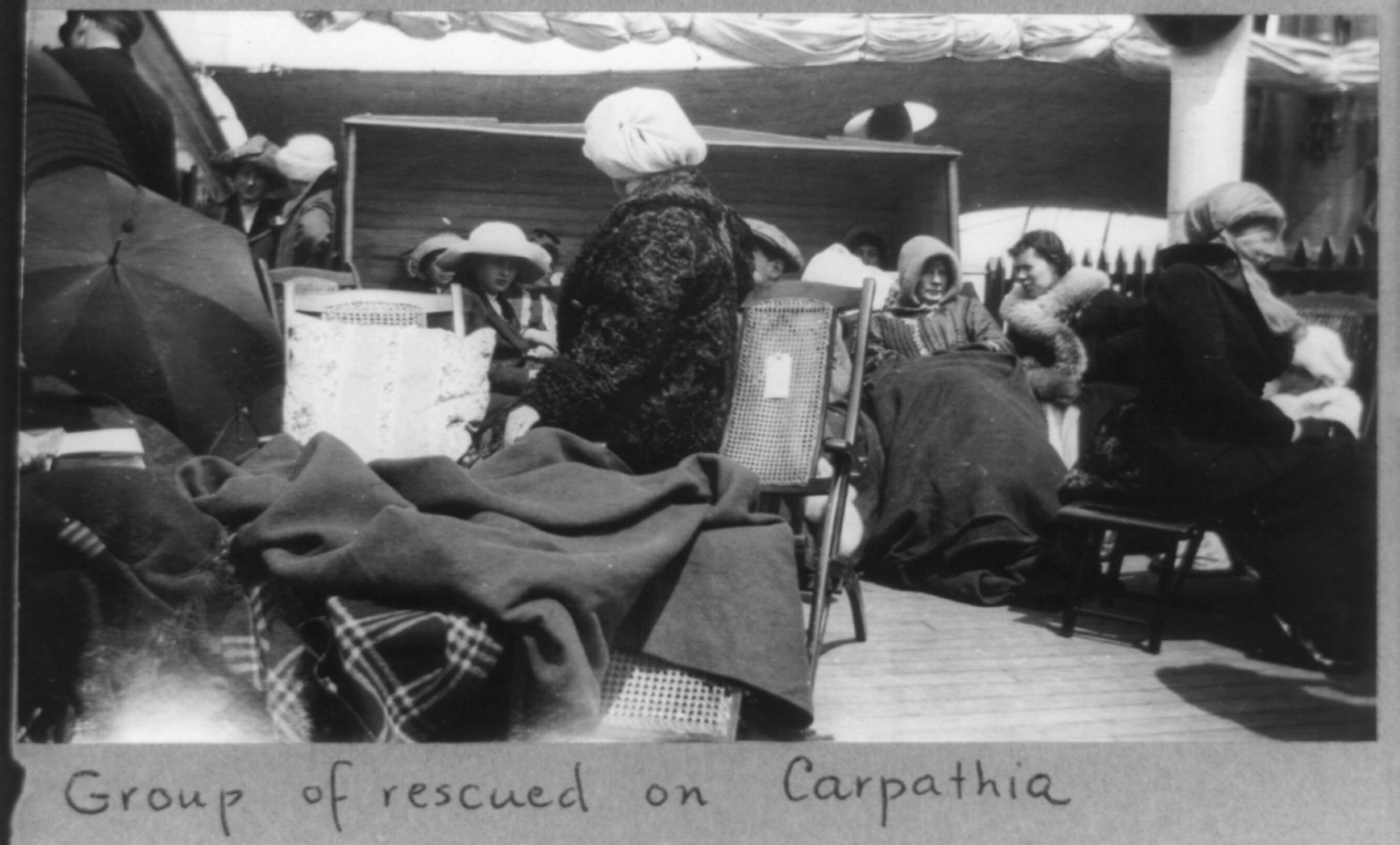
The lesson was therefore not that radio had failed. Radio had helped save hundreds of lives. What failed was the incomplete system surrounding it: inconsistent watches, divided responsibilities, uncertain priorities and insufficient international coordination.
Two inquiries—and a demand for change
The United States Senate began its investigation shortly after the survivors reached New York. The British Wreck Commissioner’s inquiry followed in London.
The investigations examined ship construction, lifeboats, navigation, ice warnings, rockets, wireless communication and the actions of nearby vessels. The official records remain essential primary sources, although they must be read critically and in their historical context.34
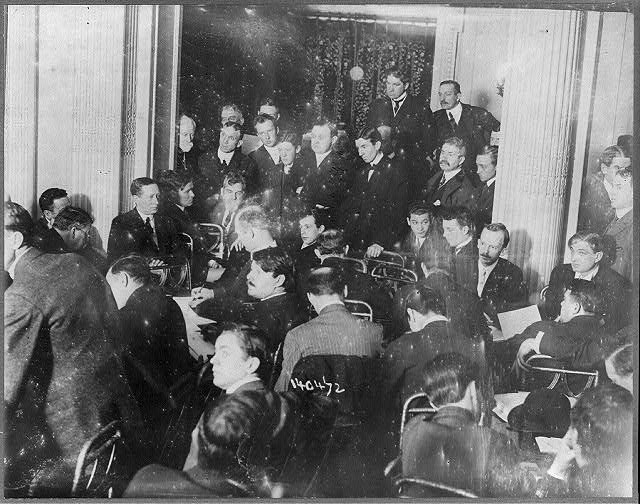
The American inquiry called for stronger regulation and continuous wireless service. In August 1912, the United States enacted the Radio Act of 1912, strengthening federal control of radio operation and licensing. Related American requirements also addressed continuous watch aboard relevant passenger vessels.5
International radiotelegraph regulations were revised in 1912. The changes helped establish clearer distress procedures, priorities and listening arrangements.6
Titanic was not the sole cause of every subsequent reform. Wireless regulation was already developing, and other maritime disasters also shaped safety policy. But Titanic gave the issue an urgency that governments and the public could no longer ignore.
From Titanic to the first SOLAS Convention
The most important international response was the first International Convention for the Safety of Life at Sea—SOLAS—signed in London in 1914.
Its scope extended far beyond radio. It addressed lifeboats, emergency arrangements, safety of navigation, fire protection and other risks revealed by the disaster. It also included requirements concerning wireless installations, operators and continuous watch.7
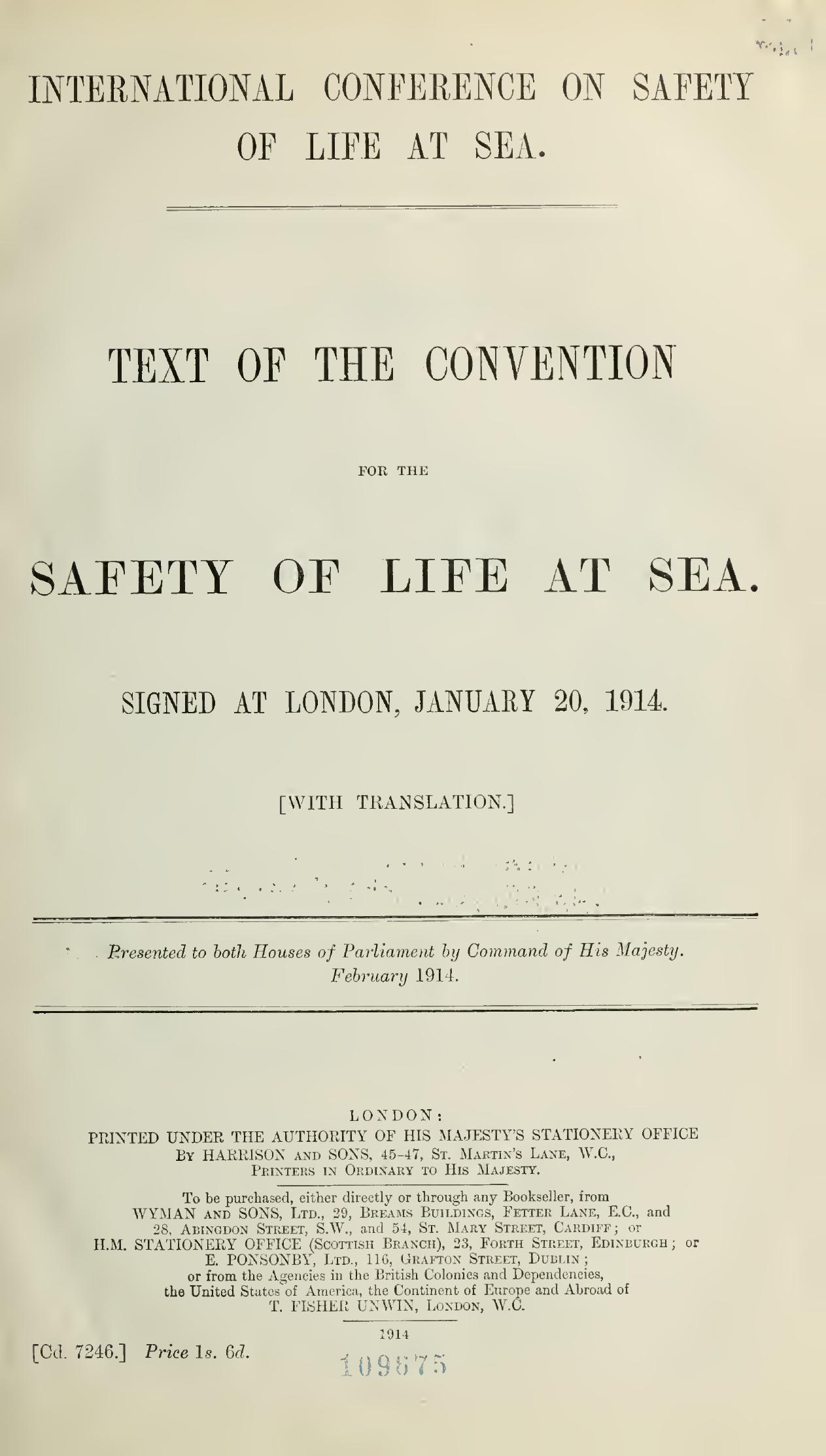
The 1914 convention did not enter into force because of the First World War. Nevertheless, it established an international framework that influenced later SOLAS conventions adopted in 1929, 1948, 1960 and 1974.8
Today, SOLAS is widely regarded as the principal international treaty governing the safety of merchant ships. Its successive versions demonstrate an important principle: maritime safety is not a single invention or response. It is a system built gradually from experience, investigation and international agreement.
From continuous listening to automatic alerting
For much of the twentieth century, maritime distress communication still relied heavily on trained radio officers, manual listening watches and Morse telegraphy.
Technology continued to develop. Radiotelephony became widespread. Search-and-rescue organisations became more coordinated. Satellites created the possibility of reaching shore authorities from almost anywhere at sea.
During the 1970s and 1980s, the International Maritime Organization and the International Telecommunication Union worked with other international partners to develop a more integrated approach. The result was the Global Maritime Distress and Safety System.
IMO member states adopted the principal GMDSS requirements through amendments to SOLAS in 1988. The system entered a phased implementation period in 1992 and became fully effective on 1 February 1999.9
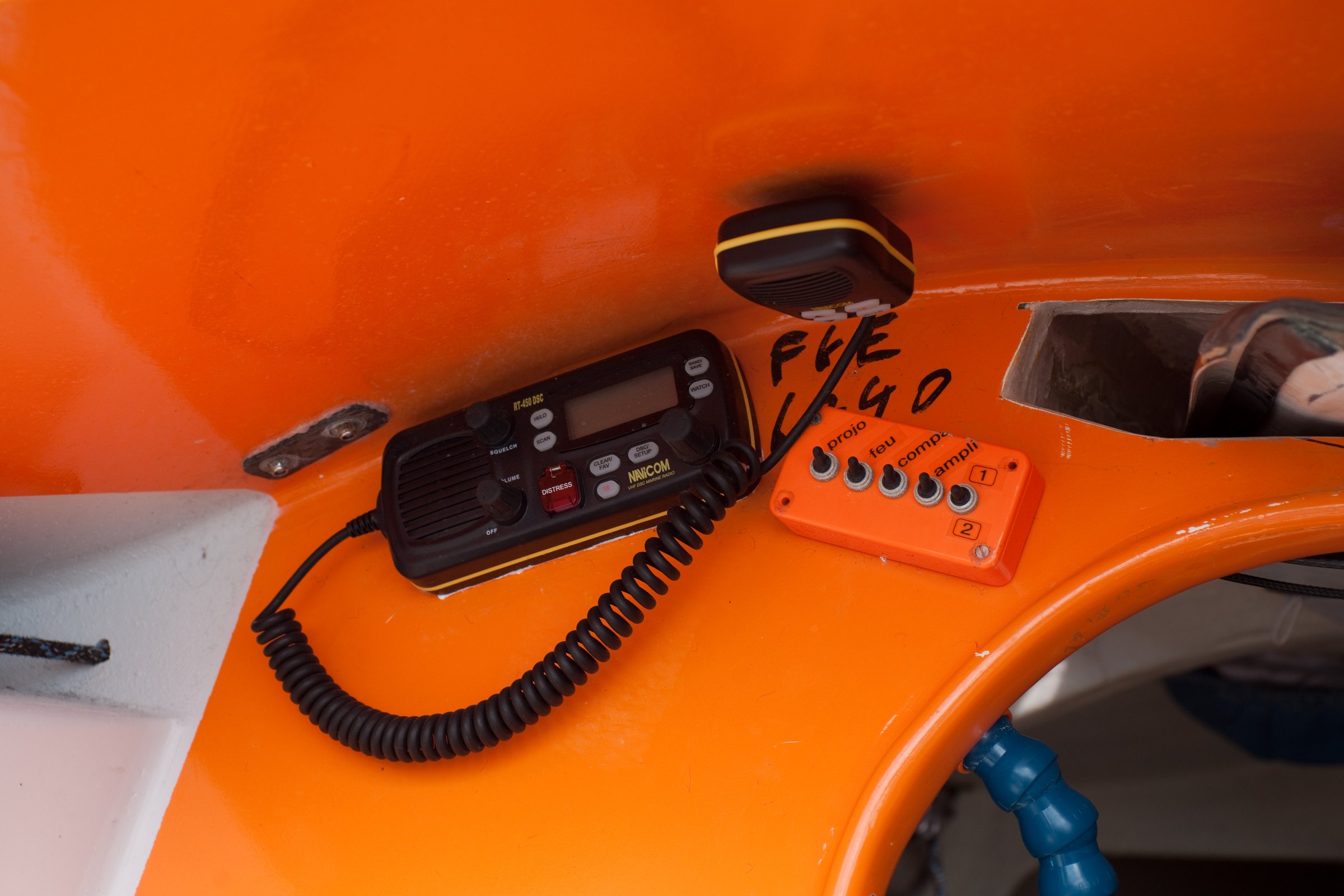
GMDSS changed the basic model of maritime distress communication. Instead of relying primarily on another operator happening to hear a voice or Morse transmission, the system was designed to make distress alerting more automatic and more directly connected to search-and-rescue authorities.
Depending on the vessel and sea area, GMDSS components can include Digital Selective Calling, satellite communication, EPIRBs, NAVTEX and Search and Rescue Transponders. The purpose is not merely to transmit a message, but to create a coordinated chain of action.
What Titanic still teaches us
Modern equipment is vastly more capable than Titanic’s spark transmitter. But the deeper lessons remain remarkably familiar.
- Information must reach the right person.
- Safety messages must take priority over routine traffic.
- Equipment must be monitored, maintained and understood.
- Responsibilities must be clear.
- Operators must recognise not only the words of a message, but its urgency and operational meaning.
GMDSS did not emerge directly or immediately from the Titanic disaster. More than seven decades separate the sinking from the 1988 SOLAS amendments that introduced the system. The connection is therefore not a straight technical line. It is a history of lessons accumulating over time.
Titanic demonstrated both the lifesaving power of radio and the danger of an incomplete communication system. SOLAS turned hard-earned lessons into international obligations. GMDSS later combined regulation, terrestrial radio, satellites, automated alerting and search-and-rescue coordination into a global framework.
The equipment changed. The frequencies changed. The organisations changed. But the objective remained the same: when people are in danger at sea, their call for help must be heard—and it must lead to action.
References and further reading
- International Maritime Organization. “Introduction / History.” Maritime Safety: Radiocommunications.
- British Wreck Commissioner’s Inquiry. Report on the Loss of the “Titanic” (S.S.): Findings of the Court, 1912, Question 6.
- British Wreck Commissioner’s Inquiry. Report on the Loss of the “Titanic” (S.S.), 1912.
- United States Senate Committee on Commerce. Investigation into Loss of Steamship Titanic, Senate Report No. 806, 62nd Congress, 2nd Session, 1912.
- Library of Congress. “The Titanic and the Law: Safety and Science.” Includes references to the Radio Act of 1912.
- International Telecommunication Union. Detailed Service Regulations Appended to the International Radiotelegraph Convention, 1912 edition.
- International Conference on Safety of Life at Sea. International Convention for the Safety of Life at Sea, signed in London, 20 January 1914.
- International Maritime Organization. “International Convention for the Safety of Life at Sea (SOLAS), 1974.”
- International Maritime Organization. GMDSS and SAR 1999.