Maritime history · Working life · Wireless
For much of the twentieth century, a ship’s connection to the world passed through a small radio room and the trained operators who listened, transmitted, repaired and kept watch.
The radio officer occupied an unusual place aboard ship. The work was technical, administrative and operational at once. A message might be a passenger telegram, a weather warning, commercial instructions, medical advice or a distress call. The same operator could move between routine traffic and life-or-death communication without leaving the chair.
There was no single universal radio-officer experience. Duties changed across decades, countries, companies and vessel types. Early spark transmitters, later valve equipment, radiotelephony and satellite terminals demanded different skills. Yet a common responsibility connected them: keeping the ship reachable beyond the horizon.
The room behind the aerials
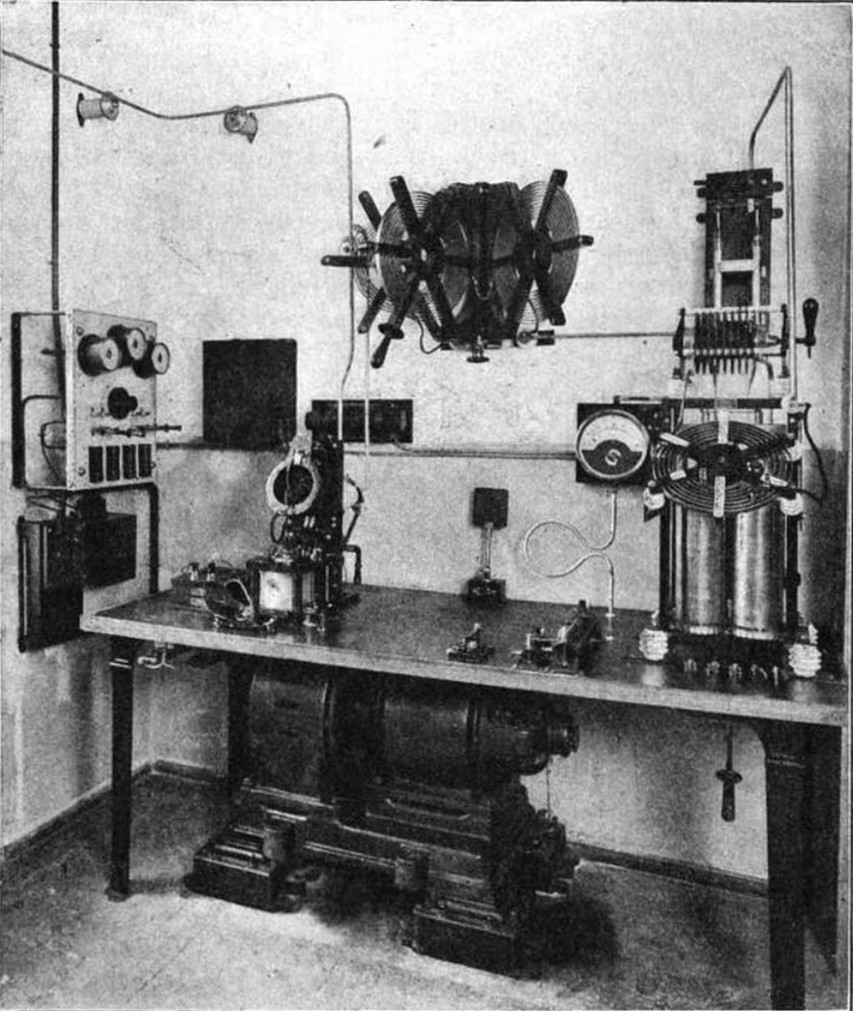
A traditional ship radio station could include transmitters, receivers, switching equipment, emergency power, batteries, clocks, logs and reference publications. Morse telegraphy carried traffic over long distances where voice could be unreliable. Operators maintained schedules with coast stations, listened on designated frequencies and copied signals that might be weak, crowded or distorted.
The job demanded more than fast Morse. Operators managed call signs, frequencies and traffic priorities. They understood propagation and interference. On many ships they also maintained radio and electronic equipment. Employment arrangements varied: in the early wireless era, some operators worked for communications companies rather than the shipowner, a division that could complicate their relationship with the bridge.
Listening was safety work
Radio watches connected individual ships to a collective safety network. A distress signal heard by another vessel could bring the message to its master and change course toward the casualty. Silence in the radio room could therefore have consequences far beyond one ship.
The operator’s most important transmission might begin with something heard while everyone else was asleep.
International rules gradually formalised equipment, qualifications, distress frequencies and listening arrangements. The details evolved through successive radio regulations and SOLAS conventions. Radio officers became licensed professionals working inside an increasingly regulated system.
A gatekeeper for the ship’s information
Before inexpensive satellite and internet links, shore communication was scarce. Messages were drafted, counted, queued and charged. The radio officer handled confidential business traffic and personal radiograms, received press summaries and sometimes produced the ship’s news sheet. Weather bulletins and navigational warnings had to reach the bridge in usable form.
This made the radio room both a communications centre and a filter. Receiving a message was only the first step. Its significance had to be recognised, logged and delivered to the person who could act on it.
From manual watch to GMDSS
By the late twentieth century, automated alerting and satellite communications made it possible to redesign the system around functions rather than a specialist continuously listening for Morse calls. IMO adopted the principal GMDSS requirements through 1988 SOLAS amendments. Phased implementation began in 1992 and the system became fully effective in 1999.
GMDSS did not mean that people ceased to matter. It redistributed responsibility. Deck officers increasingly held GMDSS operator certificates, while digital equipment maintained watches and routed alerts. Dedicated radio-officer positions disappeared from many ships, although electro-technical and communications specialists continued in particular fleets and trades.
Automation solved important vulnerabilities: an alert no longer depended solely on another person happening to hear Morse at the right moment. It also ended a distinctive shipboard profession. Former radio officers remember the concentration of night watches, the sound of distant stations and the responsibility of being the human link between ship and shore.
The radio officer did not merely operate equipment. The operator made a worldwide network present inside one ship.
References and further reading
- International Telecommunication Union. “100 Years of ITU Radio Regulations.”
- ITU. “ITU’s maritime journey: Then and now.”
- International Maritime Organization. Radiocommunications and search and rescue.