Maritime history · Search and rescue · Alaska
When fire disabled the cruise ship Prinsendam in the Gulf of Alaska in October 1980, distance, weather and darkness turned evacuation into a multinational test of coordination. All 519 people aboard were saved.
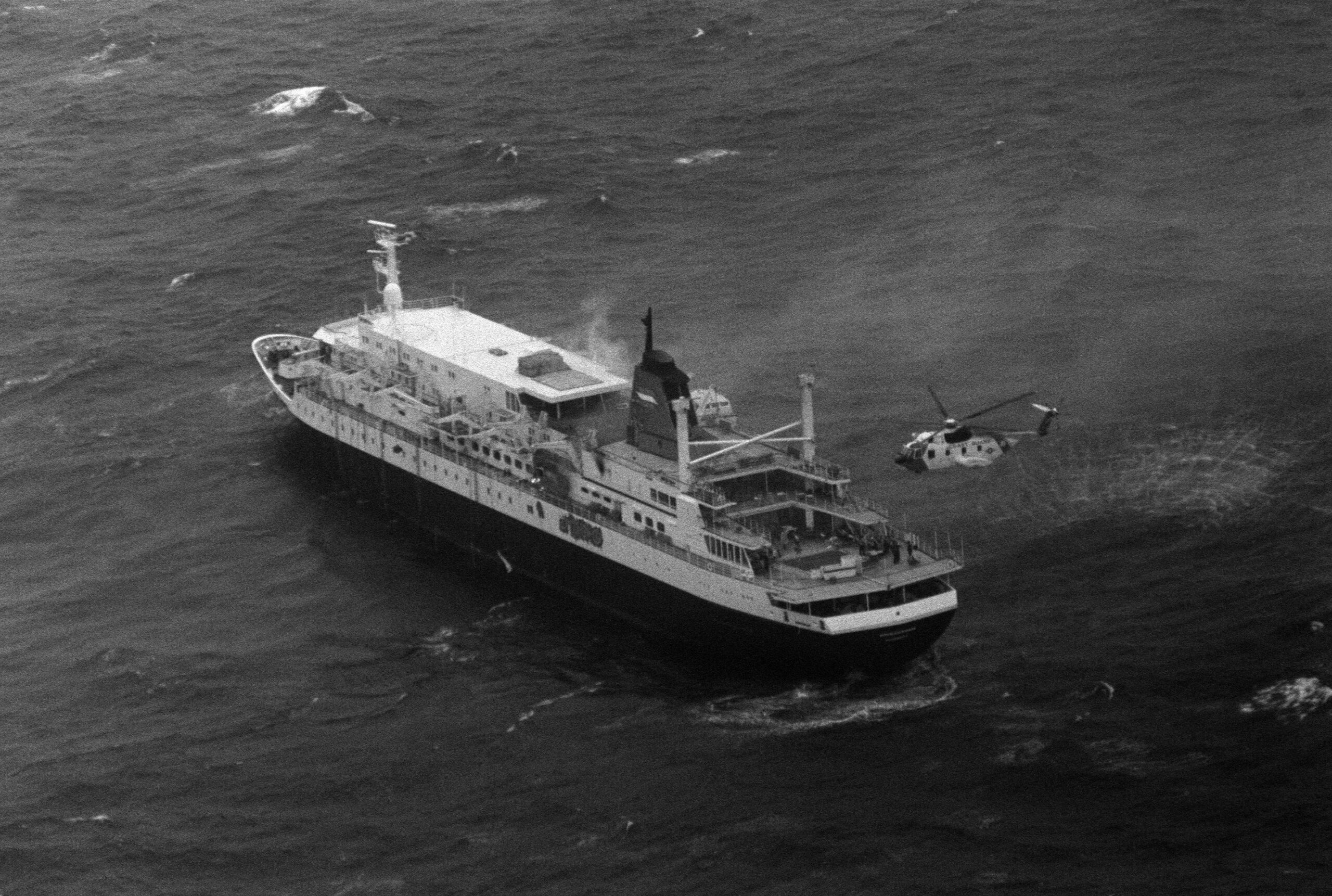
Shortly after midnight on 4 October 1980, fire broke out in the engine room of the Dutch cruise ship Prinsendam. The vessel was on a long voyage from Vancouver toward Asia, carrying many elderly passengers. Hundreds of miles of cold North Pacific water separated the ship from the nearest major bases.
The fire disabled machinery and compromised firefighting systems. At about 1:30 a.m., the ship transmitted an SOS reporting an engine-room fire and that it was dead in the water. The message reached shore authorities and the tanker Williamsburgh. What followed was not a single dramatic rescue but a long chain of decisions involving the ship’s crew, merchant vessels, the United States Coast Guard, the United States Air Force and Canadian forces.
A rescue at the edge of reach
Aircraft could arrive faster than ships, but helicopters faced a fundamental limit: fuel. Fixed-wing aircraft became airborne command posts and communications links. Air Force HC-130 aircraft refuelled Coast Guard helicopters in flight, extending their reach into an area where a simple out-and-back mission would have been impossible.
Merchant ships changed course. Coast Guard cutters Boutwell, Mellon and Woodrush headed toward the scene. The tanker Williamsburgh, much closer than many government vessels, became critically important. The response demonstrated a central truth of ocean rescue: the most useful unit is often not the one designed for rescue, but the one able to arrive.
The decision to abandon ship
As the fire continued, remaining aboard became untenable. Passengers and crew entered lifeboats in darkness and cold conditions. Helicopters hoisted people from boats and transferred them to responding vessels. The operation was slow, physically demanding and exposed evacuees to hypothermia and seasickness.
The rescue succeeded because aircraft, cutters and merchant ships became parts of one system.
The work did not end when the main groups were recovered. One lifeboat remained unaccounted for after darkness returned. Searchers continued, using aircraft, ships and flares. Boutwell located the missing boat early the following morning and recovered its occupants.
519 people accounted for
Official Coast Guard accounts state that all 519 passengers and crew were rescued, without deaths or serious injuries. That outcome is especially striking because the emergency combined fire, machinery failure, a large population, remote waters and prolonged exposure.
The statement “not a single life lost” should not turn the event into a miracle detached from human work. It was the result of early alerting, a master who ordered evacuation before escape became impossible, merchant ships responding, crews improvising within their capabilities, aerial refuelling and persistent accounting for every survival craft.
What Prinsendam reveals about coordination
No individual organisation possessed everything the incident required. Helicopters brought speed but needed fuel. Fixed-wing aircraft brought endurance and coordination but could not lift people from boats. Cutters brought command capability and recovery capacity but needed time to arrive. Merchant ships brought proximity and space.
The communications network allowed these different strengths to be combined. Information about the fire, the ship’s position, the number of people, the status of lifeboats and the location of responding units turned scattered resources into a coordinated operation.
Prinsendam later sank while under tow. The people were already safe. In rescue history, that order matters: property can be lost after the objective has been achieved.
The defining number is not the distance flown or the ships deployed. It is 519—the number of people who came home.
References and further reading
- U.S. Coast Guard, Proceedings of the Marine Safety Council. “The Prinsendam.”
- U.S. Coast Guard. “The Long Blue Line: Prinsendam.”
- U.S. Coast Guard Historian’s Office. USCGC Boutwell history.