Range · Equipment · Offshore safety
Marine VHF is immediate, familiar and extremely useful—but it is not a universal offshore lifeline. Understanding its physical and operational limits is part of using it responsibly.
VHF is built for nearby communication
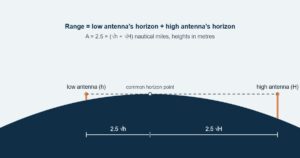
Marine VHF normally propagates by radio line of sight. Range depends strongly on the height of both antennas, surrounding terrain and the installation—not simply the wattage printed on the radio. IMO’s planning formula for VHF coast-station coverage contains antenna heights but no term for transmitter power.1 The UK MCA notes that sea area A1 is based on a ship’s antenna 4 m above sea level, and that the area is smaller with a lower antenna or a portable radio.2 A handheld at cockpit height and a fixed set connected to a masthead antenna do not have the same practical reach.
What DSC adds
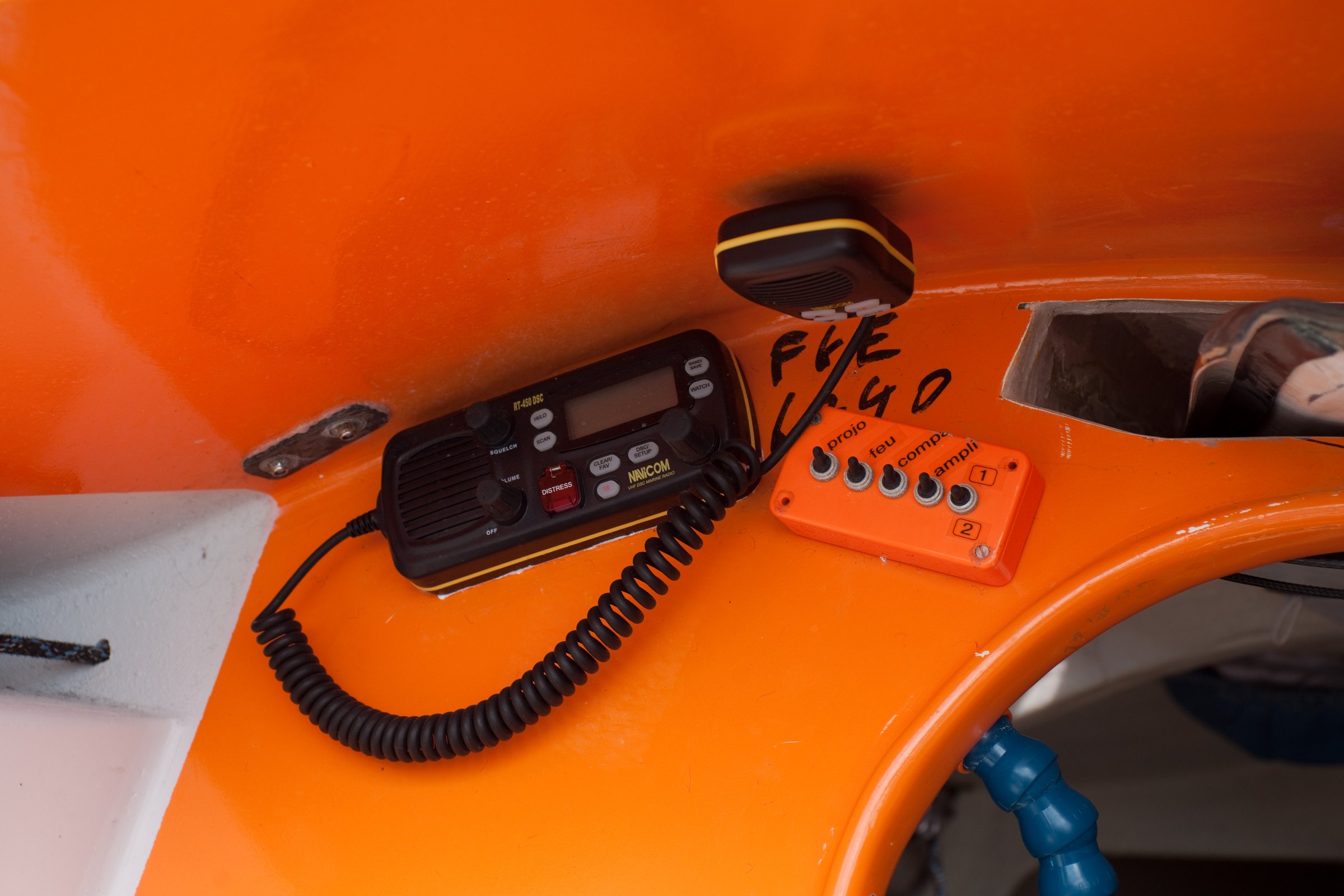
A Digital Selective Calling distress alert carries the vessel’s MMSI, its position and the time that position was valid, and the nature of distress if the operator selected it.3 Position and time are added automatically when the radio receives data from a GNSS receiver; otherwise they must be entered by hand.3 The U.S. Coast Guard urges owners “in the strongest terms possible” to connect their GPS to their DSC radio.4
DSC improves alerting; it does not repeal the range limits of VHF. Sea area A1 is defined by the coverage of VHF coast stations that keep continuous DSC watch.1,2 A disconnected or stale position source can leave an alert without useful current coordinates.
Height in numbers
IMO’s planning formula for VHF coverage is A = 2.5 × (√H + √h) nautical miles, where H and h are the two antenna heights in metres.1 Applied as a rough guide, it shows how much height matters:
| Situation | Antenna heights | Approx. range |
|---|---|---|
| Handheld to handheld | 1.5 m and 1.5 m | 6 nm |
| Masthead to masthead | 10 m and 10 m | 16 nm |
| Handheld to coast station | 1.5 m and 100 m | 28 nm |
| Masthead to coast station | 10 m and 100 m | 33 nm |
Calculated values, rounded. The formula is a planning criterion for paths over open water; terrain, installation losses and conditions change real-world range.
What happens beyond VHF coverage
Offshore, reliable communication may require equipment designed for longer range: MF/HF, recognised GMDSS satellite services or a properly registered 406 MHz beacon, depending on vessel, voyage and applicable requirements.1,5,7 These systems do different jobs. An EPIRB alerts and identifies, but it is not a means of conversation. Beacons that support the Galileo Return Link Service can receive an automatic acknowledgement that the alert has been received and the position computed—operational since early 2020—but nothing more.5,6
The useful question
Do not ask only whether a radio works at the marina. Ask who can receive it along the intended route, at what antenna height, and what independent method remains when the vessel moves beyond that coverage.
References and further reading
- IMO Resolution A.801(19), Annex 3: definitions of sea areas A1–A4 and VHF range criterion. Summary: IHO, Definitions of Sea Areas A1, A2, A3 and A4 (PDF).
- Maritime and Coastguard Agency (2024). GMDSS VHF DSC procedures for small boat users. Updated 24 July 2024.
- ITU-R Recommendation M.541-11 (2023). Operational procedures for the use of digital selective-calling equipment in the maritime mobile service.
- U.S. Coast Guard Navigation Center. Digital Selective Calling.
- Cospas-Sarsat. Cospas-Sarsat system. U.S. Coast Guard Navigation Center: SARSAT beacons (registration).
- European GNSS Service Centre. Search and Rescue (SAR) / Galileo service.
- International Telecommunication Union. Maritime communications and safety. Updated January 2025.
- Image: Fanny Schertzer (2009). VHF radio with Maritime Distress Safety System. Wikimedia Commons, CC BY-SA 2.5. Cropped.